Why Your Headlights Turn Yellow in the UAE, and How to Fix It
Take a walk through any parking lot in Sharjah and you’ll notice it — headlights on cars just a few years old already look cloudy, yellowed, or hazy. This isn’t a coincidence. It’s a direct result of intense UV exposure combined with heat, dust, and sun, conditions the UAE has in abundance.
The good news: in most cases, this doesn’t mean you need new headlights. It means you need restoration.
This isn’t just cosmetic. Cloudy headlights significantly reduce light output, which directly impacts night driving visibility and how well other drivers can see you.
Why Do Headlights Turn Yellow or Foggy?
Modern headlight covers are made of polycarbonate plastic, not glass. Over time, UV rays break down the protective coating on this plastic, causing:
- Yellowing or amber discoloration
- Surface haze and reduced clarity
- Reduced brightness and light output
- A visibly dull, aged look — even on a well-maintained car
Because polycarbonate is more UV-sensitive than glass, cars in high-sun climates like the UAE tend to show this wear noticeably faster than in cooler, cloudier regions.
Why Headlight Condition Matters for Safety
This isn’t just cosmetic. Cloudy headlights significantly reduce light output, which directly impacts night driving visibility and how well other drivers can see you. Given UAE road conditions and highway speeds, reduced headlight clarity is a safety factor worth addressing promptly rather than treating it as a purely cosmetic issue.
What Does Headlight Restoration Involve?
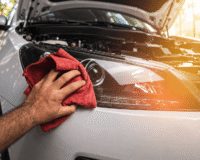
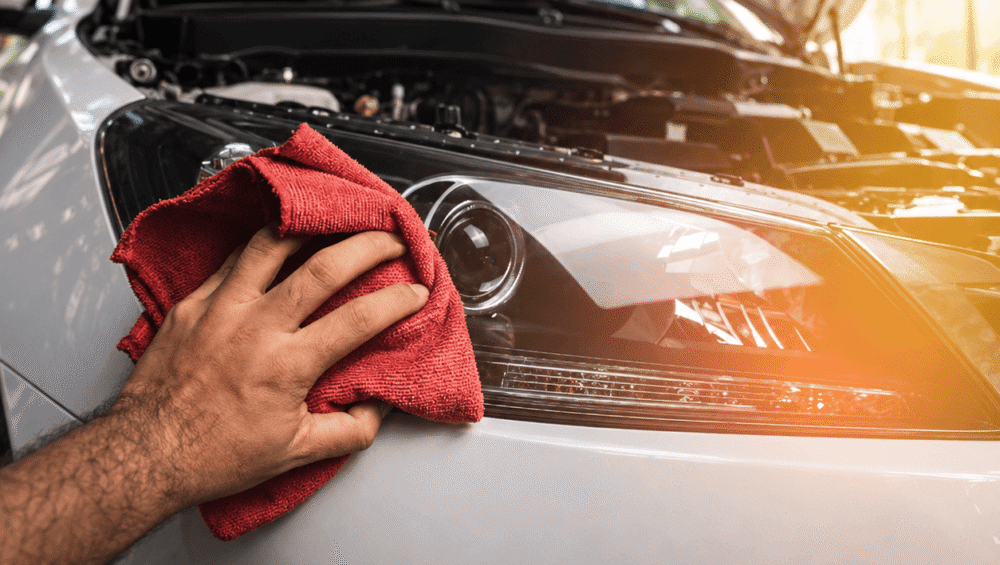
Our restoration process typically includes:
- Removing oxidation and UV damage from the headlight surface
- Polishing to restore clarity and light transmission
- Applying a protective sealant to slow future yellowing
This restores near-original clarity without the cost of replacing the entire headlight assembly.
How Often Should You Restore Your Headlights?
Given UAE sun exposure, many vehicles benefit from restoration every 18 months to maintain optimal clarity, though this varies based on parking conditions (covered vs. direct sun) and vehicle age.